I translate complex human experiences into connected systems of care.
In this project, it meant turning relational, human support into a scalable program and digital product for patients living with Pulmonary Arterial Hypertension (PAH).
In this project, it meant turning relational, human support into a scalable program and digital product for patients living with Pulmonary Arterial Hypertension (PAH).
Impact
Patients living with Pulmonary Arterial Hypertension (PAH) navigate complex care across fragmented systems often managing critical decisions with limited, disconnected support. This work transformed that experience into a connected support model, integrating service and product to enable continuous care in daily life.
What this became:
1. A Connected Support Program (PAH Companion withMe)
A longitudinal care experience built on rapport over time, consistent touchpoints through out the journey, and individualized support.
1. A Connected Support Program (PAH Companion withMe)
A longitudinal care experience built on rapport over time, consistent touchpoints through out the journey, and individualized support.
2. A Digital Companion (Care4Today® Connect)
A mobile app designed to extend support into daily life.
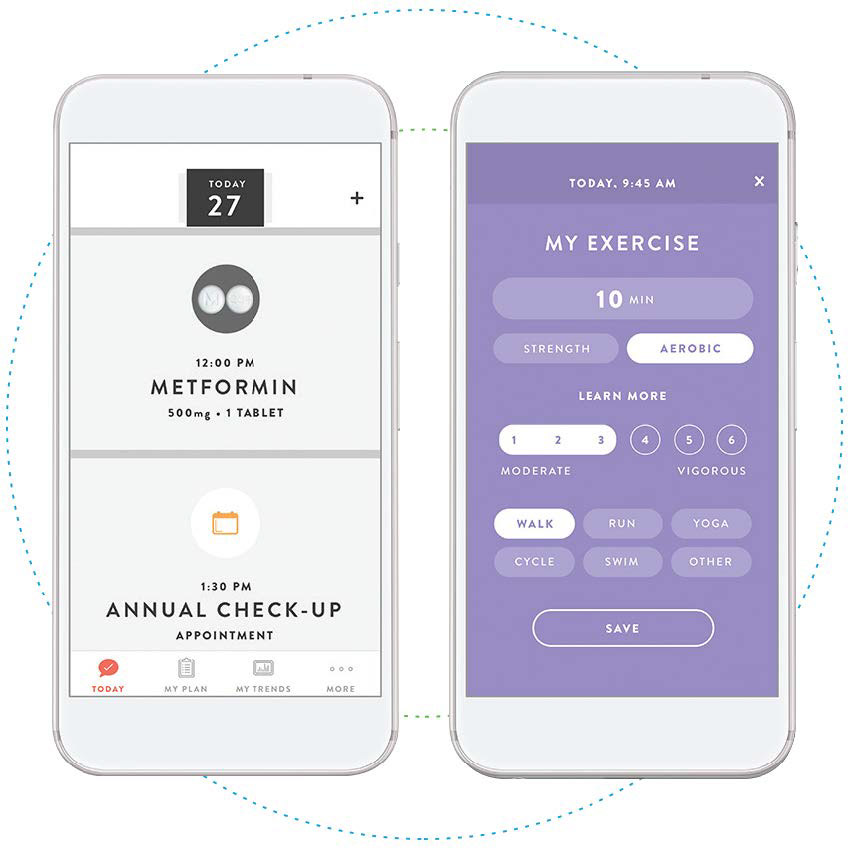
Tools like Care4Today® Connect help patients track medications and appointments, monitor health and activity, prepare for doctor visits, and share progress with care teams. But more importantly, the app was designed to reduce overwhelming, reinforce continuity, and support behavior, not just tracking.
Tools like Care4Today® Connect help patients track medications and appointments, monitor health and activity, prepare for doctor visits, and share progress with care teams. But more importantly, the app was designed to reduce overwhelming, reinforce continuity, and support behavior, not just tracking.
Impact
Helped transform patient support from episodic interactions into a connected ecosystem of care, enabling greater continuity, engagement, and confidence throughout the treatment journey.
Helped transform patient support from episodic interactions into a connected ecosystem of care, enabling greater continuity, engagement, and confidence throughout the treatment journey.
Most importantly, re-framed adherence not as compliance, but as confidence, trust, and feeling supported.
Challenge
Medication adherence is often framed as a compliance issue.
But for people living with chronic conditions like Pulmonary Arterial Hypertension (PAH), adherence is far more complex. It's shaped by fear, side effects, emotional fatigue, and the burden of long-term care. At Johnson & Johnson, existing tools focused on reminders and tracking but failed to address why patients struggled to stay on therapy. This revealed a deeper challenge:
But for people living with chronic conditions like Pulmonary Arterial Hypertension (PAH), adherence is far more complex. It's shaped by fear, side effects, emotional fatigue, and the burden of long-term care. At Johnson & Johnson, existing tools focused on reminders and tracking but failed to address why patients struggled to stay on therapy. This revealed a deeper challenge:
Adherence is not a memory problem. It is a behavioral and emotional experience.
Client
Johnson & Johnson - Actelion
Johnson & Johnson - Actelion
Role
Design Research Lead
Design Research Lead
Directed patient-centered research, stakeholder alignment, and experience strategy to understand the emotional, behavioral, and practical challenges of living with Pulmonary Arterial Hypertension (PAH). Led the translation of insights into a connected service model and digital experience that supported medication adherence, confidence, and long-term engagement.
Methods
Secondary Research, Role Play Research, Stakeholder Interviews (Patients living with PAH, Caretakers, PCP, Nurses), Co-Design
Secondary Research, Role Play Research, Stakeholder Interviews (Patients living with PAH, Caretakers, PCP, Nurses), Co-Design
Opportunity
Re-imagine support as something that:
+ connects across service and product
+ fits into everyday routines
+ evolves with patients over time
+ fits into everyday routines
+ evolves with patients over time
Not more information, but ongoing, integrated support.
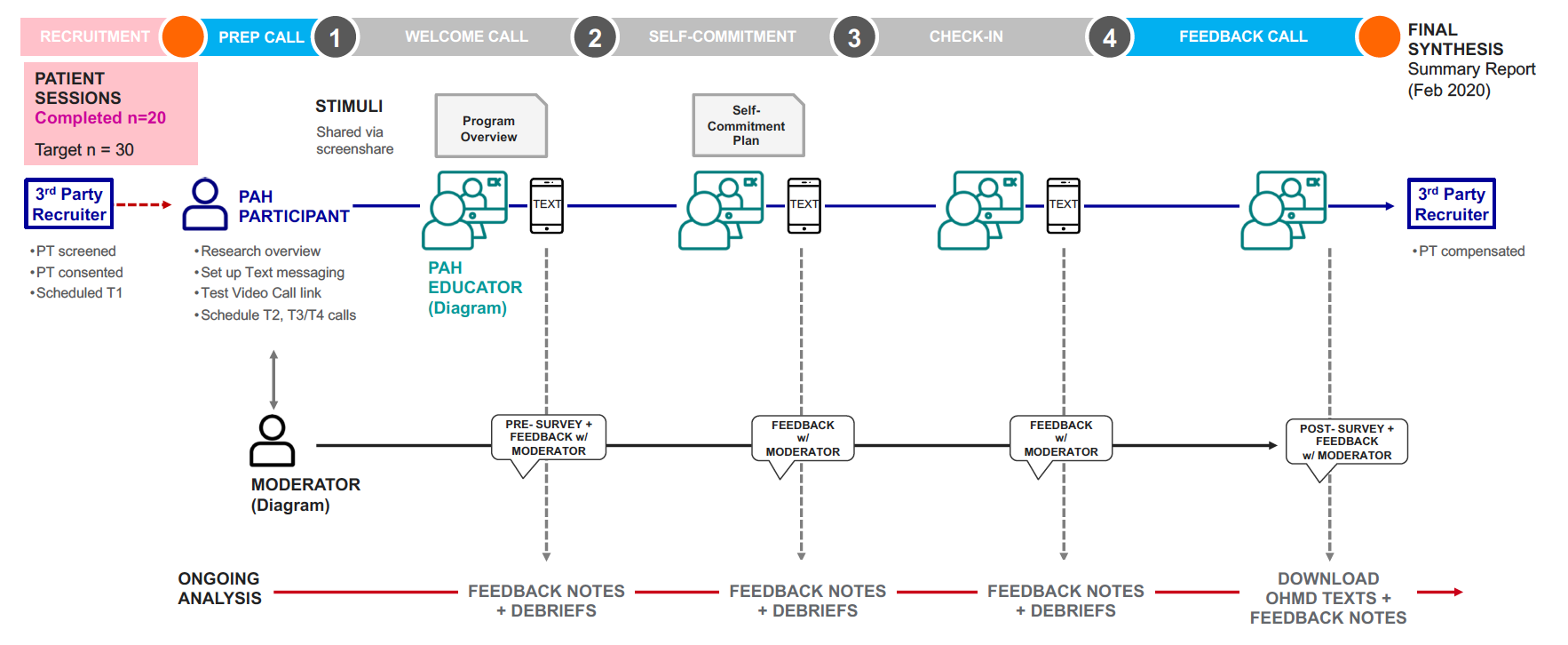
Workflow diagram showing a multi-stage PAH patient engagement study process from recruitment to final synthesis report.
Approach
We conducted design-led research with PAH patients, caregivers and PCPs using:
+ Remote 1:1 interviews
+ Role play interactions simulating real program care scenarios
+ Role play interactions simulating real program care scenarios
These role play sessions became critical.
Rather than relying solely on interviews, we acted out moments of care:
- starting a new medication
- preparing for doctor visits
- navigating fear and uncertainty
reflecting on the people and relationships that gave patients strength to continue managing their care
- preparing for doctor visits
- navigating fear and uncertainty
reflecting on the people and relationships that gave patients strength to continue managing their care
What is revealed...
+ the language patients actually use
+ the emotional dynamics between patients, caregivers, and their support network
+ how support is built through tone, timing, and relationship, not just information and content
+ the emotional dynamics between patients, caregivers, and their support network
+ how support is built through tone, timing, and relationship, not just information and content
From Service to Product
The work began as a human support program, what became the PAH Companion experience:
The work began as a human support program, what became the PAH Companion experience:
+ One-on-one conversations with trained support specialists
+ Structured touchpoints over time
+ Tools to help patients prepare, reflect, and engage
+ Structured touchpoints over time
+ Tools to help patients prepare, reflect, and engage
Programs like this provide ongoing education, connection, and guidance through multiple channels (phone, text, digital), helping patients stay engaged in their care journey. However, the breakthrough came when we asked:
What if the product behaved like the service?
Key Insights
Adherence Is About Control, Not Compliance
Patients were more likely to stay on therapy when they felt a sense of ownership and understanding - not when they were simply reminded.
Emotional Barriers Drive Drop-Off
Fear of side effects, uncertainty about effectiveness, and daily fatigue often outweighed rational intent.
Support Must Evolve Over Time
Patients’ needs changed across their journey—from onboarding to long-term maintenance—yet most tools remained static.
Reflection Builds Confidence
Moments of looking back, tracking progress, recalling successes, helped reinforce commitment and motivation.
Patients were more likely to stay on therapy when they felt a sense of ownership and understanding - not when they were simply reminded.
Emotional Barriers Drive Drop-Off
Fear of side effects, uncertainty about effectiveness, and daily fatigue often outweighed rational intent.
Support Must Evolve Over Time
Patients’ needs changed across their journey—from onboarding to long-term maintenance—yet most tools remained static.
Reflection Builds Confidence
Moments of looking back, tracking progress, recalling successes, helped reinforce commitment and motivation.
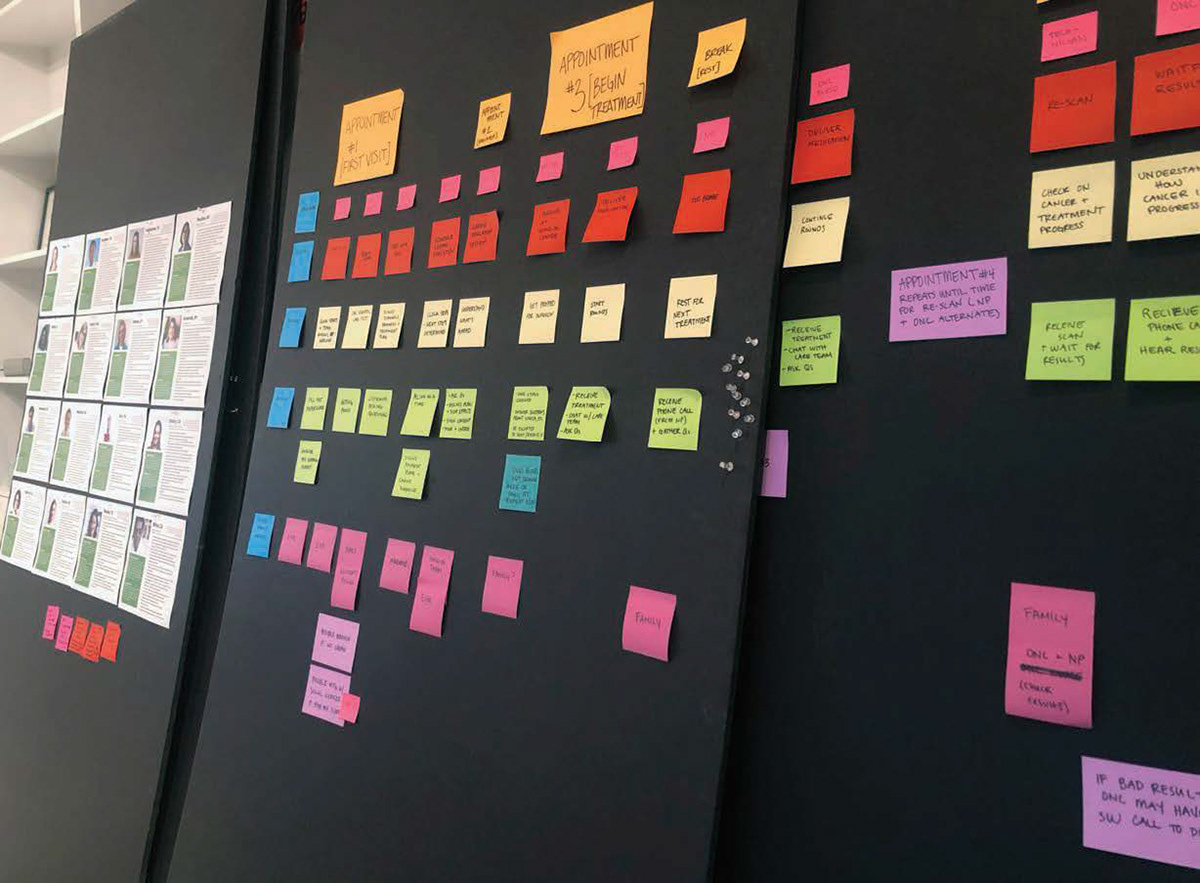
Research synthesis captured not only clinical touchpoints, but also the emotional realities, support networks, and behavioral adaptations involved in managing chronic care. Participant identities and sensitive details have been anonymized to protect privacy and confidentiality.
Reflections
Systems break down when services and products are designed in isolation. Real impact comes from designing the connections between them.
The most effective digital experiences don’t replace human support. They extend it. Translating relational care into product requires preserving tone, timing, and trust, not just functionality.
Role play revealed nuances that traditional research often misses, especially around language, emotion, and interaction dynamics.