I led trauma-informed design research and co-design initiatives to understand how fragmented shelter transitions shaped the journey of families experiencing homelessness. The work revealed opportunities to build greater continuity, trust, and dignity across the NYC shelter system.
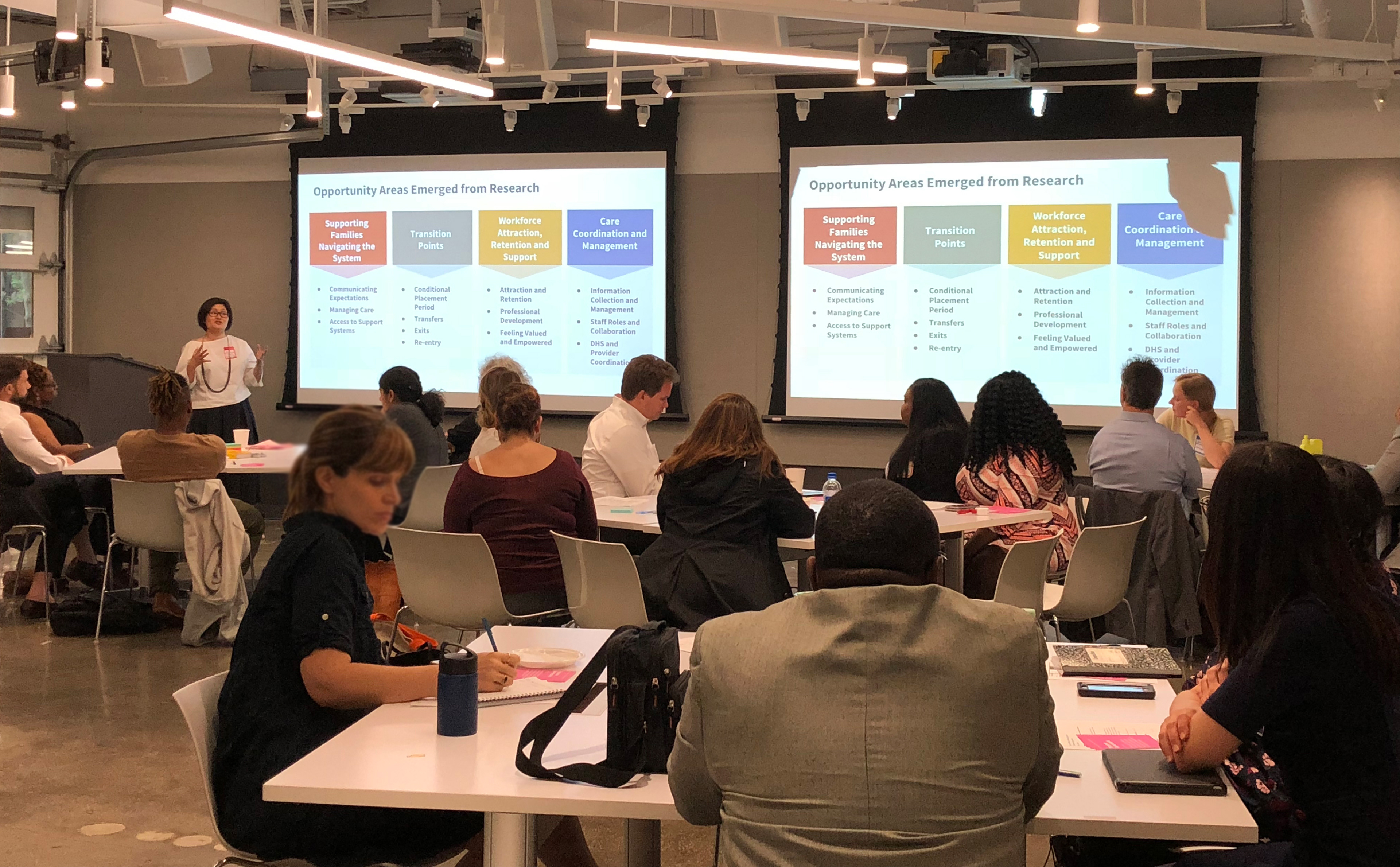
Co-Design workshop bringing together leadership, program staff, trauma experts, and direct service providers.
Impact
Improved understanding of barriers facing families experiencing homelessness and informed more equitable service delivery approaches through trauma-informed research involving families, providers, and city stakeholders.
+ Helped shift conversations within NYC shelter services from transactional case management toward trauma- informed care and long-term stability
+ Developed a framework for embedding trauma-informed principles across governance, service delivery, and organizational culture
+ Elevated front-line staff and transition points as critical components of the family experience
+ Facilitated cross-stakeholder co-design sessions that surfaced opportunities for systemic improvement
+ Created a shared language around trauma-informed care across service providers and leadership
+ Developed a framework for embedding trauma-informed principles across governance, service delivery, and organizational culture
+ Elevated front-line staff and transition points as critical components of the family experience
+ Facilitated cross-stakeholder co-design sessions that surfaced opportunities for systemic improvement
+ Created a shared language around trauma-informed care across service providers and leadership
Challenge
At the time of the project, approximately 71% of people experiencing homelessness in New York City were families with children. Families navigating the shelter system often encountered fragmented communication, unclear processes, and repeated assessments across multiple providers and transition points.
At the time of the project, approximately 71% of people experiencing homelessness in New York City were families with children. Families navigating the shelter system often encountered fragmented communication, unclear processes, and repeated assessments across multiple providers and transition points.
How do we identify shelter practices that unintentionally re-traumatize families and help restore stability for families experiencing homelessness?
The NYC Service Design Studio partnered with DHS to better understand where shelter practices unintentionally reinforced trauma, and where service experiences could be redesigned to better support stability, dignity, and trust.
Client
DHS
DHS
Partner
Mayor's Office of Economic Opportunity Service Design Studio
Mayor's Office of Economic Opportunity Service Design Studio
Role
Design Research + Service Design Lead
Design Research + Service Design Lead
Led trauma-informed design research and cross-sector co-design initiatives involving families, service providers, city agencies, and leadership stakeholders. Synthesized insights into strategic opportunities and service frameworks that informed more equitable, dignified, and human-centered approaches to care within the NYC shelter system.
Opportunity
Rather than focusing solely on operational efficiency or housing placement metrics, the work re-framed homelessness services as an experience ecosystem shaped by emotional, relational, and systemic interactions over time. The project explored:
+ How trauma manifests within public service systems
+ How transitions disrupt trust and continuity
+ How systems designed around urgency can unintentionally dehumanize families
+ What trauma-informed care could look like at both policy and service-delivery levels
+ How transitions disrupt trust and continuity
+ How systems designed around urgency can unintentionally dehumanize families
+ What trauma-informed care could look like at both policy and service-delivery levels
The goal was not simply to optimize services, but to understand how systems could better support agency, dignity, and stability during periods of crisis.
Approach
The research combined ethnographic inquiry, systems thinking, participatory design, and trauma-informed practices to understand both lived experience and organizational dynamics.
Research Methods
+ 31 stakeholder interviews across DHS leadership, program staff, trauma experts, and direct service providers
+ Focus groups with families navigating the shelter system
+ Shelter and PATH observations and tours
+ Secondary research on trauma-informed care best practices
+ Co-design workshops with cross-functional stakeholders
+ 31 stakeholder interviews across DHS leadership, program staff, trauma experts, and direct service providers
+ Focus groups with families navigating the shelter system
+ Shelter and PATH observations and tours
+ Secondary research on trauma-informed care best practices
+ Co-design workshops with cross-functional stakeholders
The work emphasized participatory engagement methods designed to build trust and create safer environments for dialogue and reflection.
Participatory Design Tools
One participatory activity, My Journey, invited families to map emotional and logistical moments throughout their previous experiences where they were able to overcome something challenges. This exercise surfaced patterns around:
One participatory activity, My Journey, invited families to map emotional and logistical moments throughout their previous experiences where they were able to overcome something challenges. This exercise surfaced patterns around:
+ Repetitive assessments feeling intrusive and dehumanizing
+ Sudden transitions disrupting routines and trust
+ The importance of acknowledging resilience and progress over time
+ Sudden transitions disrupting routines and trust
+ The importance of acknowledging resilience and progress over time
These activities helped move conversations beyond policy abstraction into lived experience.
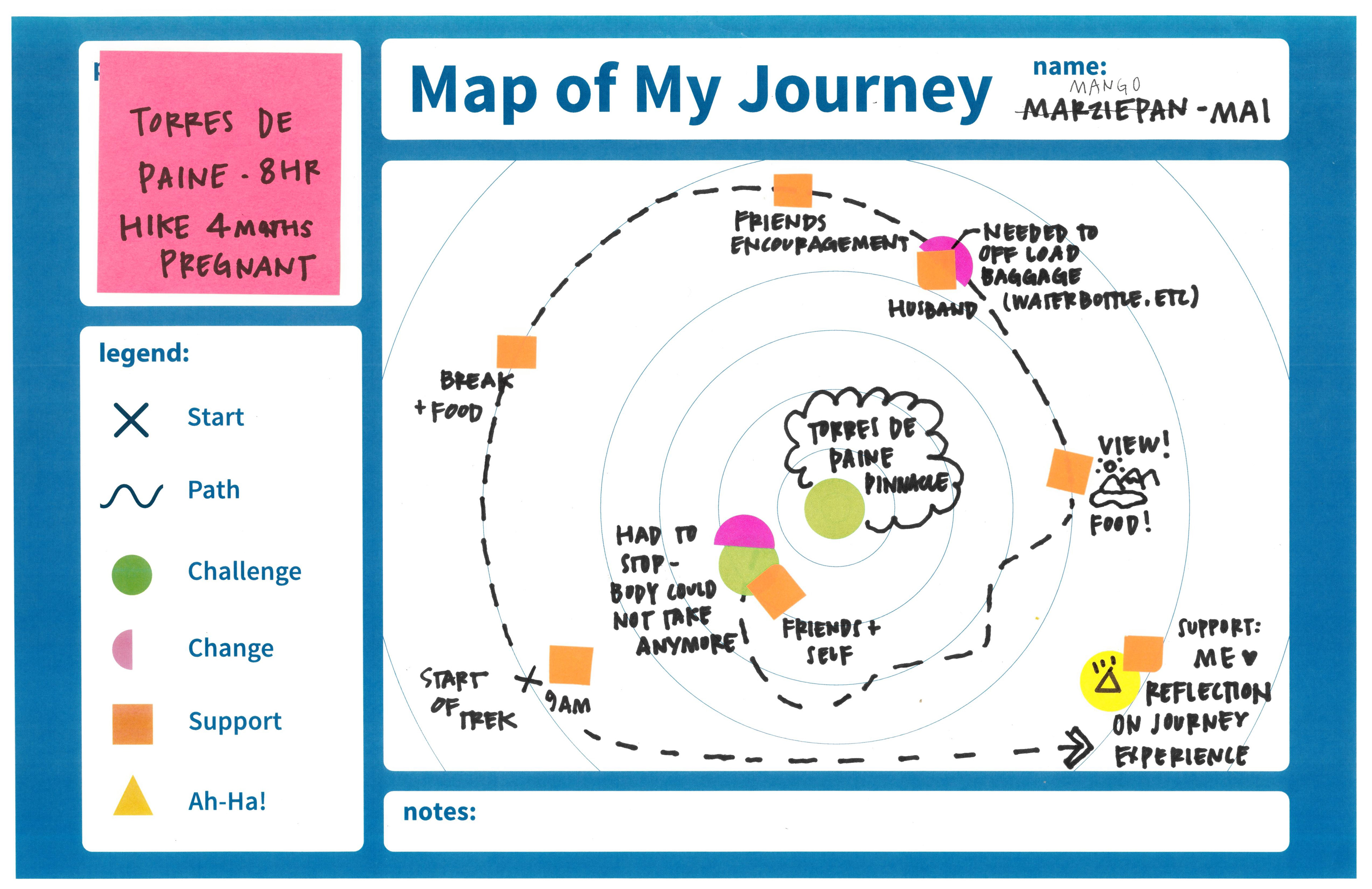
Low fidelity journey map shared with participants during our focus group. Building trust through shared vulnerability.
Designing Participation
To create a safer and more open environment for discussion, we designed a low-fidelity journey-mapping activity centered around moments of challenge, resilience, and personal growth.
To create a safer and more open environment for discussion, we designed a low-fidelity journey-mapping activity centered around moments of challenge, resilience, and personal growth.
Rather than asking participants to immediately disclose difficult experiences, I first shared my own personal journey map documenting a physically and emotionally challenging hike in Patagonia while five months pregnant...an experience where I ultimately did not reach the summit.
The activity intentionally modeled vulnerability, imperfection, and reflection as a way to reduce hierarchy and encourage more authentic participation.
This approach helped create space for participants to discuss experiences of resilience, transition, and overcoming adversity through their own narratives and visual storytelling.
Key Tension
Public Systems are usually designed around urgency and throughput. Families, however, experience these systems emotionally.
Public Systems are usually designed around urgency and throughput. Families, however, experience these systems emotionally.
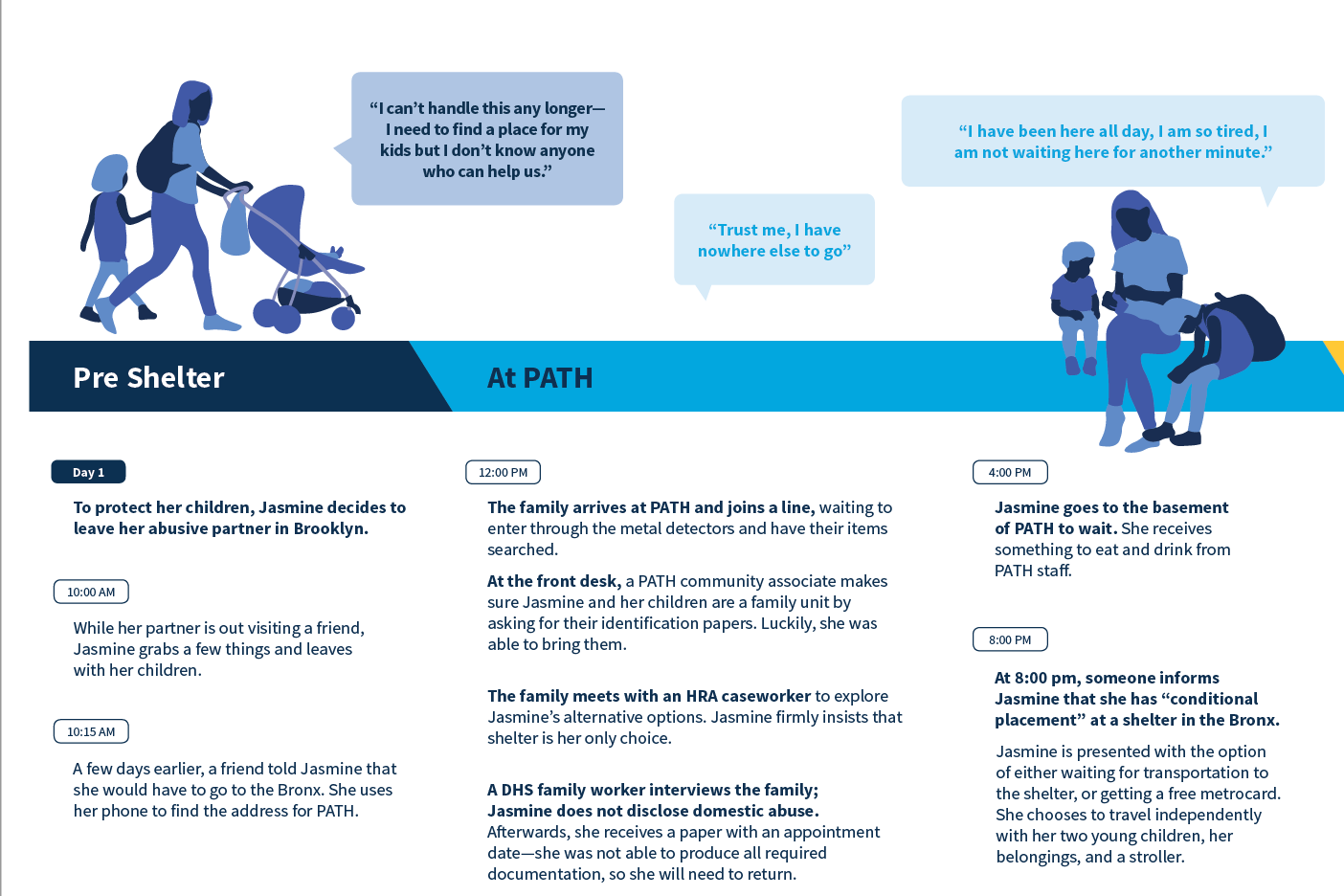
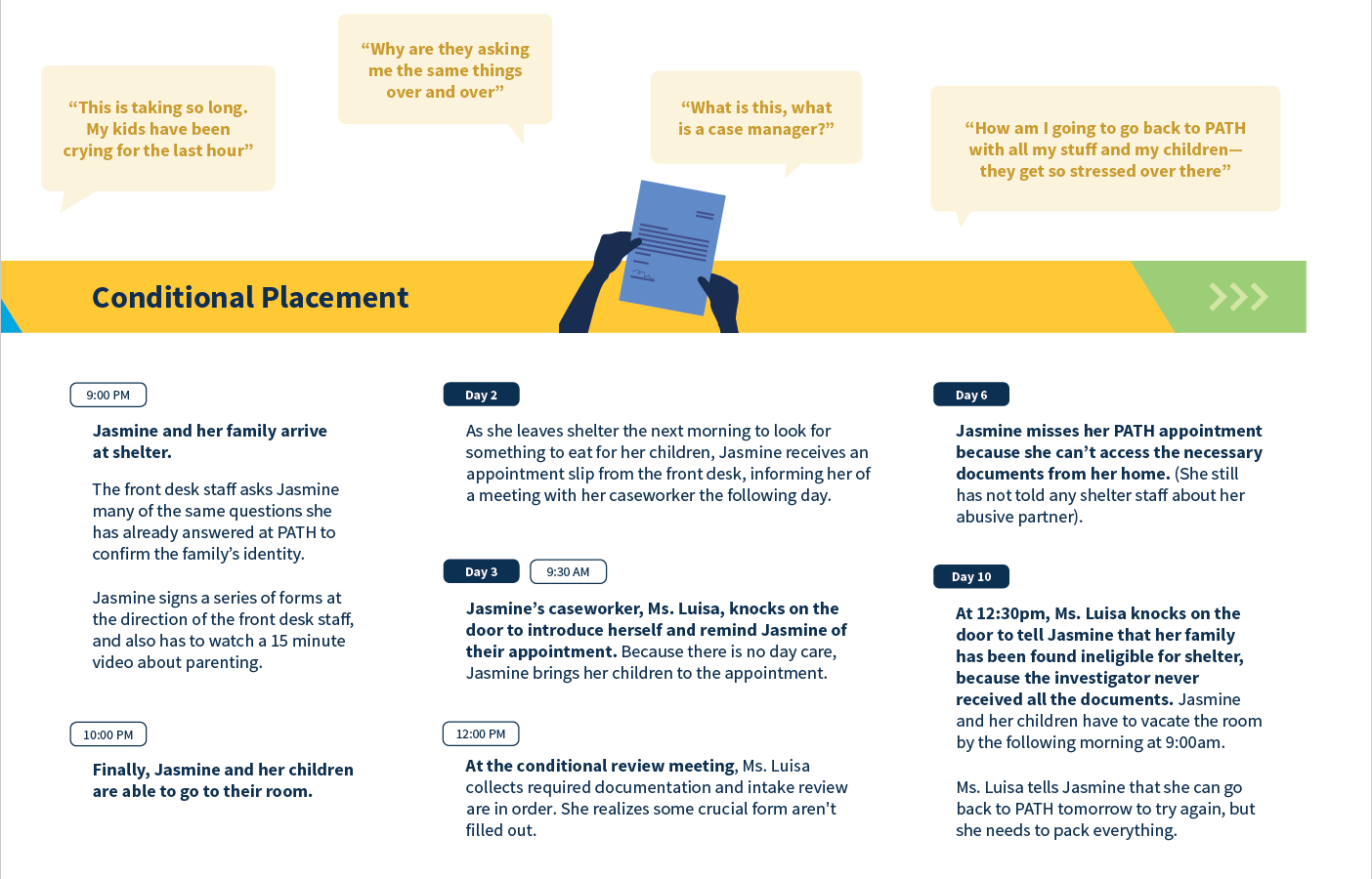
This tension became especially visible during various transitions throughout their journey:
- Entering shelter intake at PATH
- Moving from conditional placement to placement
- Interacting with multiple in-take providers and case managers
- Repeatedly retelling traumatic experiences
- Moving from conditional placement to placement
- Interacting with multiple in-take providers and case managers
- Repeatedly retelling traumatic experiences
While systems prioritized operational movement, families often experienced instability, confusion, and emotional exhaustion.
Key Insights
Through research with various stakeholders, the project identified several interconnected opportunity spaces for improving both service delivery and organizational systems. These insights became the foundation for validating and exploring trauma-informed enhancements across the NYC shelter ecosystem.
Families navigate systems emotionally, not administratively
Repeated transitions, fragmented communication, and inconsistent expectations compounded instability and re-traumatization.
Repeated transitions, fragmented communication, and inconsistent expectations compounded instability and re-traumatization.
Transition points shape trust
Moments of intake, placement, transfer, and re-entry often became the most emotionally disruptive experiences within the shelter system.
Moments of intake, placement, transfer, and re-entry often became the most emotionally disruptive experiences within the shelter system.
Front-line staff are critical to system experience
Staff operating within emotionally demanding environments significantly shaped how families experienced care, stability, and support.
Staff operating within emotionally demanding environments significantly shaped how families experienced care, stability, and support.
Trauma-informed care requires systems-level alignment
Improving family experience required coordination across communication, policy, workforce support, and service delivery, not isolated interventions.
Improving family experience required coordination across communication, policy, workforce support, and service delivery, not isolated interventions.
Framework Development
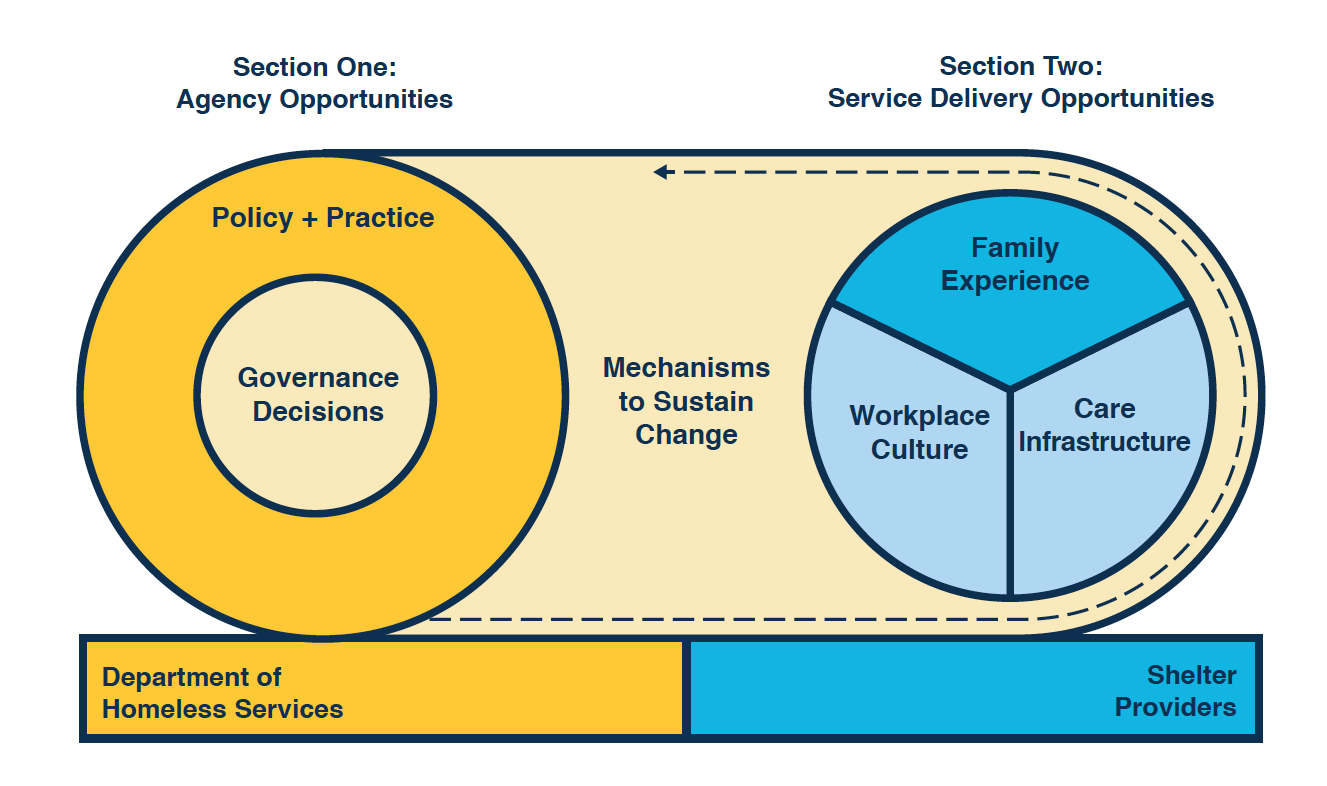
The final framework addressed:
+ Governance and policy decisions
+ Service delivery and family experience
+ Organizational mechanisms needed to sustain long-term cultural change
The final framework addressed:
+ Governance and policy decisions
+ Service delivery and family experience
+ Organizational mechanisms needed to sustain long-term cultural change
The work positioned trauma-informed care not as a standalone training initiative, but as a systems-level design challenge.
Reflections
The project reinforced that families experience public services cumulatively across transitions, relationships, and time, not as isolated touchpoints.
It also highlighted how trauma-informed care requires systems-level alignment across communication, staffing, policy, and service delivery, rather than standalone interventions.
The work deepened my understanding of how participatory design and co-creation can help organizations move beyond operational problem-solving toward more humane, emotionally aware systems of support.